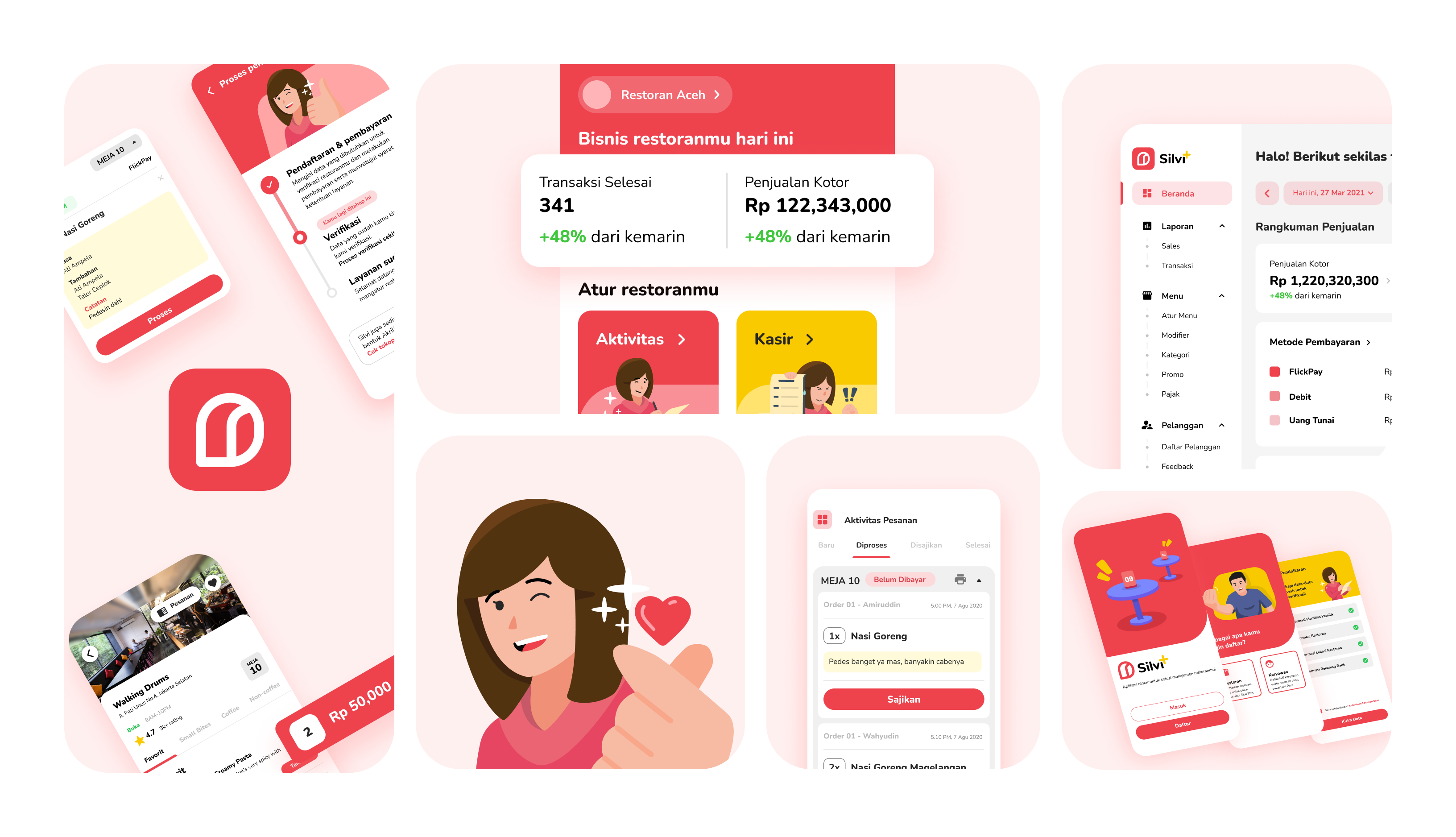
Product Design · Nov 2020 – Nov 2021

From paper chaos to contactless dining.

Role Co-Founder · Product Managing, Product Designing
Company Silvi
Platform iOS · Android · Web
Timeline 1 year
Silvi — POS and contactless dining web-app
75% of merchant orders processed through contactless QR ordering
−32% reduction in serving time — from 34 min average to 23 min
+20% revenue increase for restaurants with a second floor
22 restaurant and café owners interviewed in problem exploration

Background

A designer who ate at the places he was designing for.

As a product designer at Silvi — a company focused on mid-to-low end restaurants and cafés — I spent most of my weeks actually working from those cafés. My job was to design tools for merchants who were struggling with their day-to-day operations, and I couldn't stop noticing the friction everywhere.

Calling for a waiter. Waiting 34 minutes for food. Watching staff shuffle paper slips between floors. There was a clear gap between what technology could do and what was happening in these kitchens. That gap became the project.

Problem Exploration

What 22 restaurant owners told us about running their business.

We interviewed 22 restaurant and café owners to move past assumptions. The problems that came back were consistent and specific.

"

In this pandemic situation, it's a hard time for us to pay employee salaries.

Restaurant owner, Jakarta

"

Too much paper in the serving process. So hard to track the progress.

Café manager, Bandung

"

Inputting customer data manually is a big hassle, even though we really need it.

Restaurant owner, Surabaya

"

We're not getting much traffic anymore due to social distancing regulations.

Café owner, Yogyakarta

Problem Framing

The serving process is untrackable — and a mess.

We ran a design sprint with the product team to map the current experience end to end and identify where things actually broke down. The flow looked normal on paper. The reality was fragmented, manual, and impossible to track at scale.

📋
Order queue scattered across paper No single source of truth for what's been ordered, what's being prepared, and what's been served
🏠
Getting orders to the second floor Staff had to physically carry paper slips between floors, creating delays and errors
⚙️
Serving "bureaucracy" is entirely manual Every status update — prepared, ready, served — required a human in the loop with a physical note
💸
Menu price updates done by hand No central system meant price changes happened inconsistently and slowly
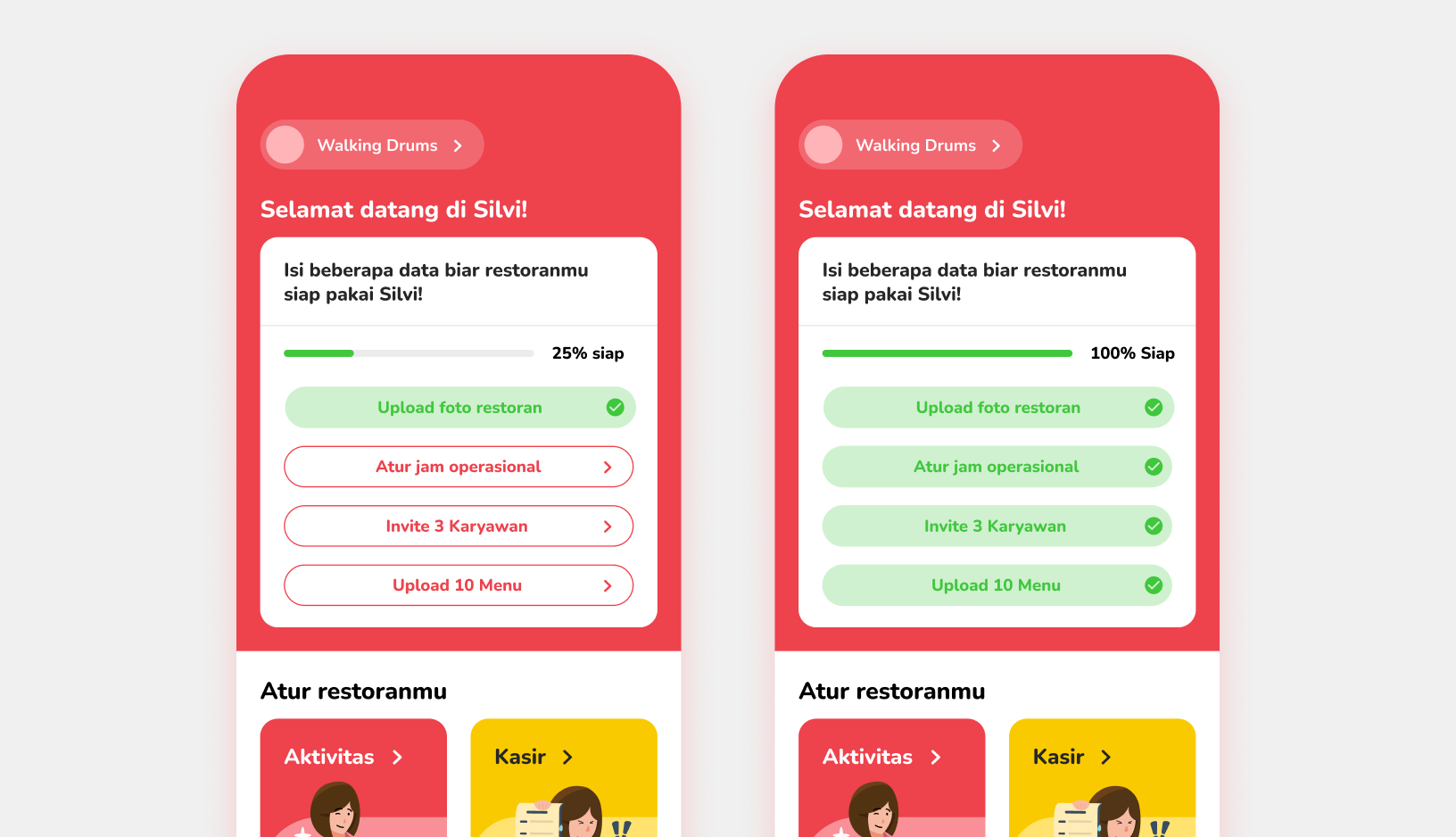
Reduce order serving time
Digitalize the order queue end to end
Drive more orders from customers through a digital menu

Proposed Solution

One hypothesis, two interlocking components.

The solution was to combine an order monitoring feature for staff with a contactless dining experience for customers — connected by a QR code.

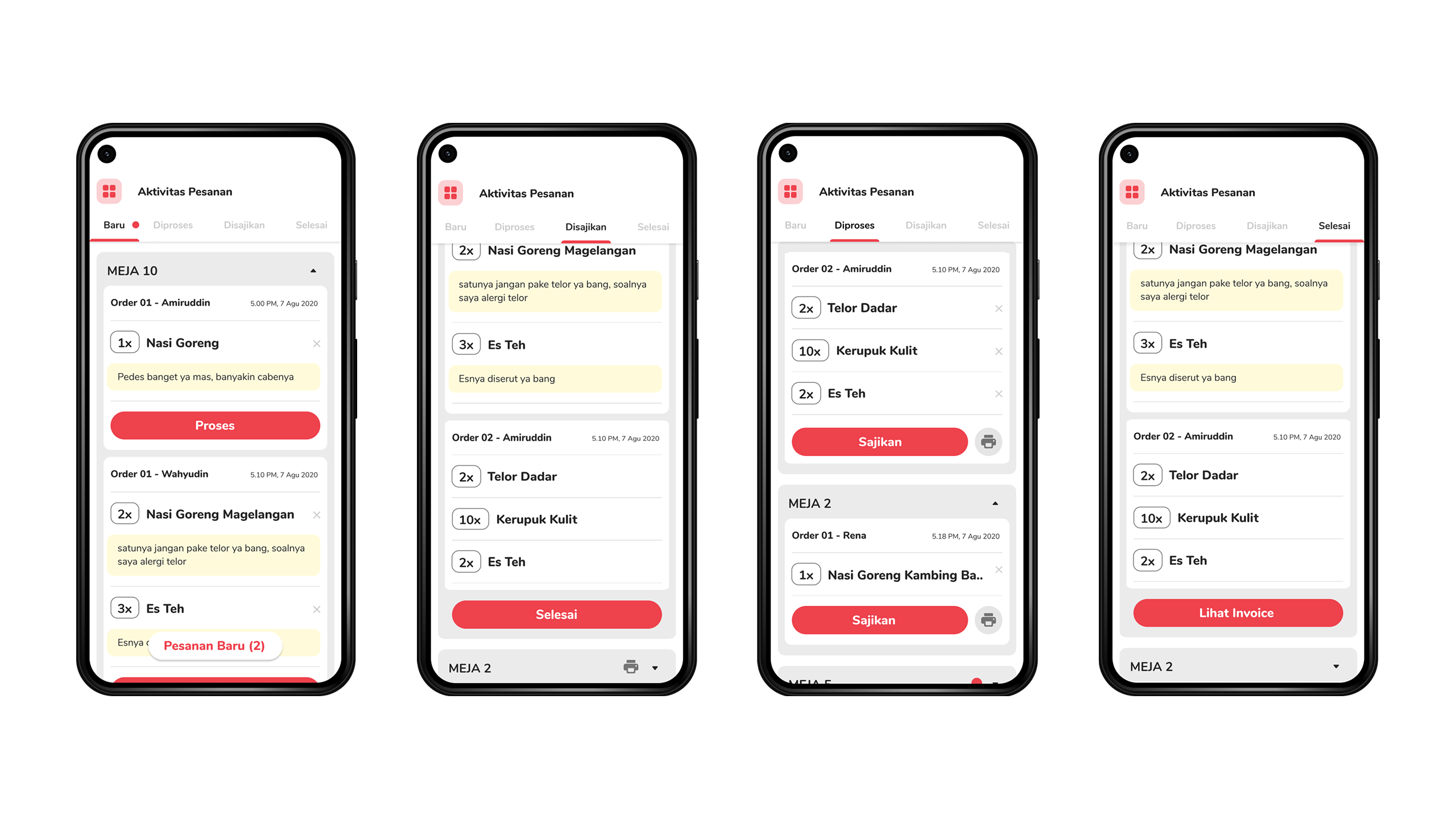
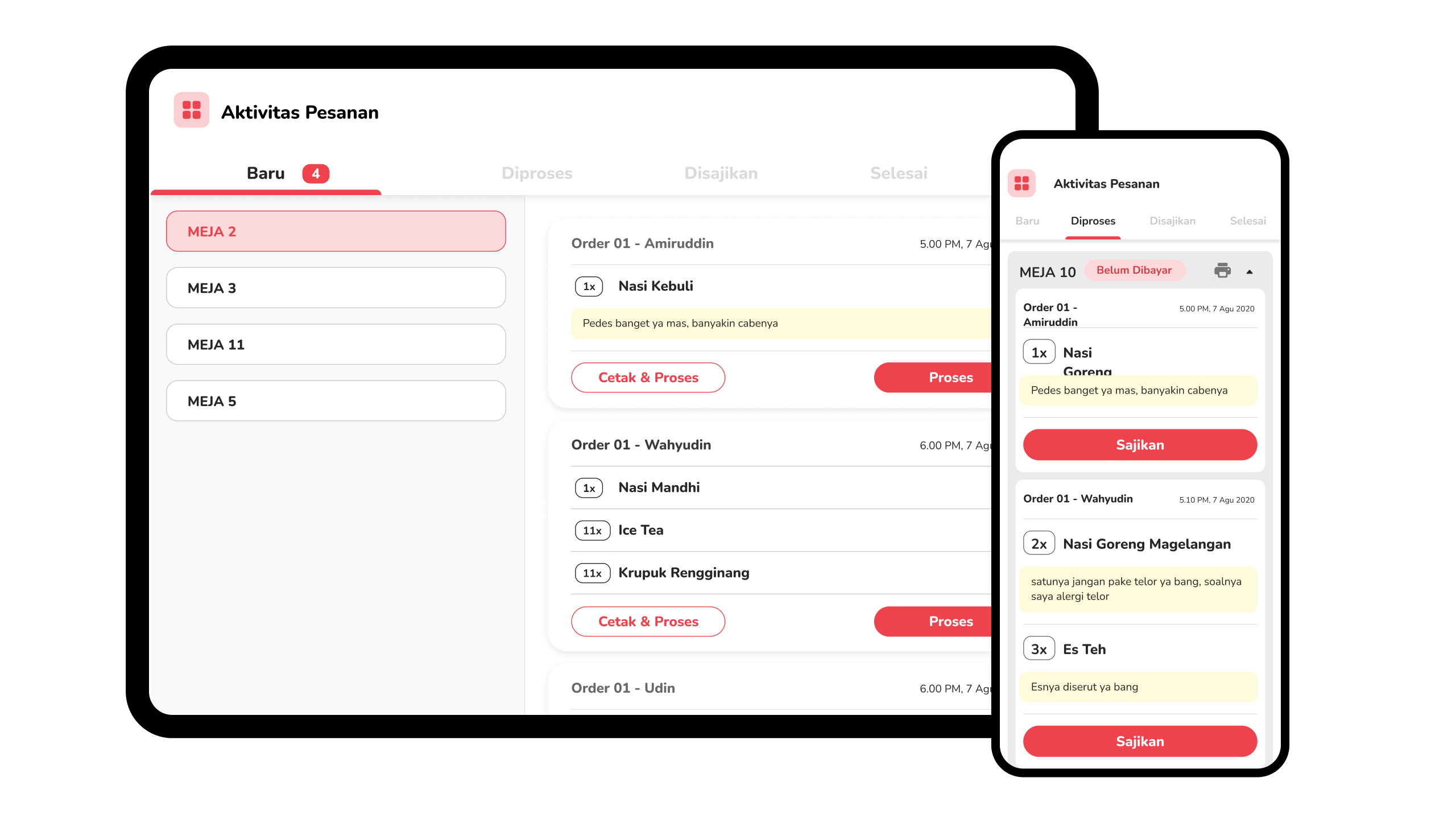
Order monitoring interface for merchants

For Merchants

Order monitoring, end to end

A dedicated screen in Silvi's POS where staff can see every table's order status in real time — what's been placed, what's being prepared, and what's ready to serve. Paper slips replaced by a live dashboard.

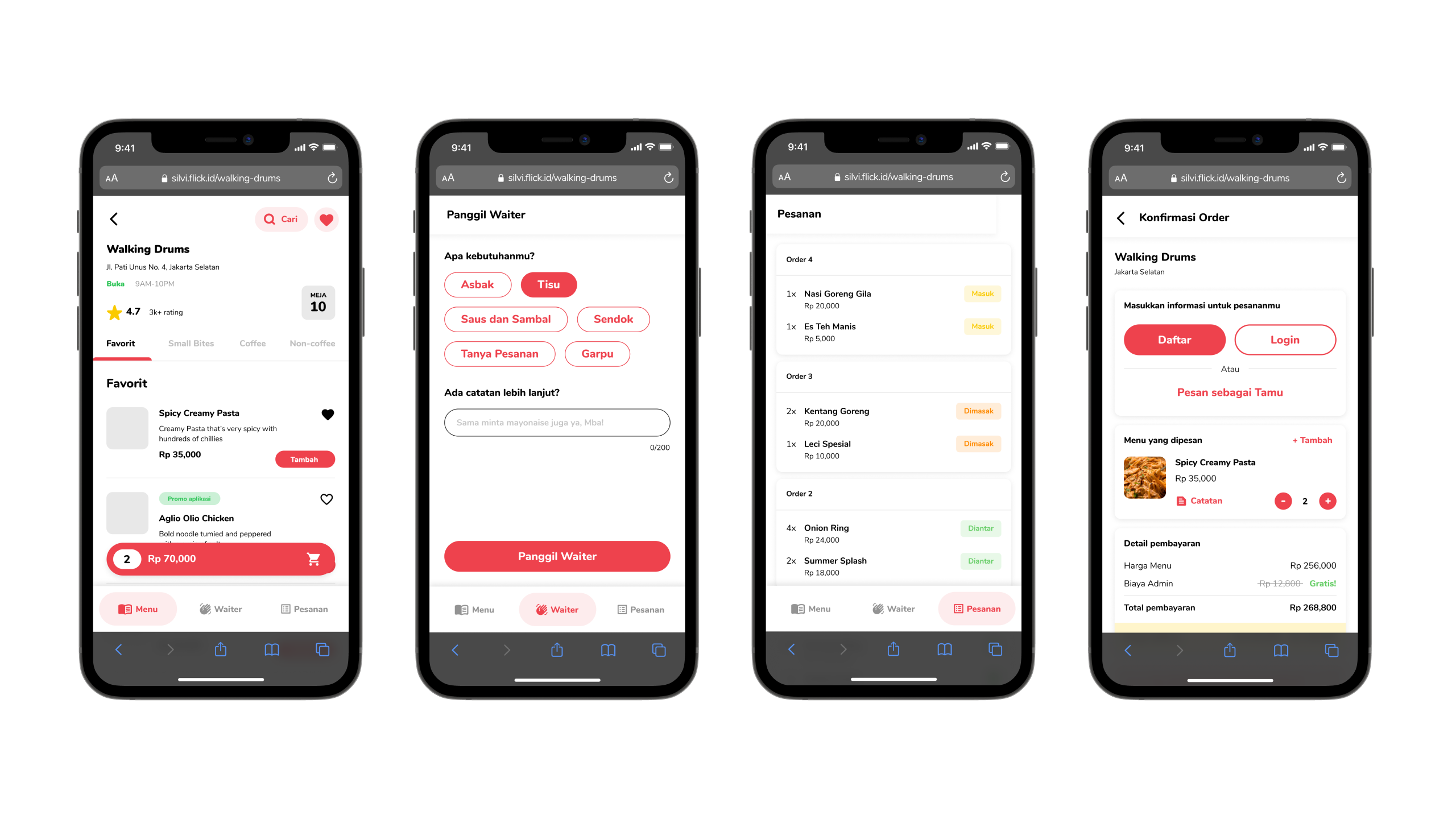
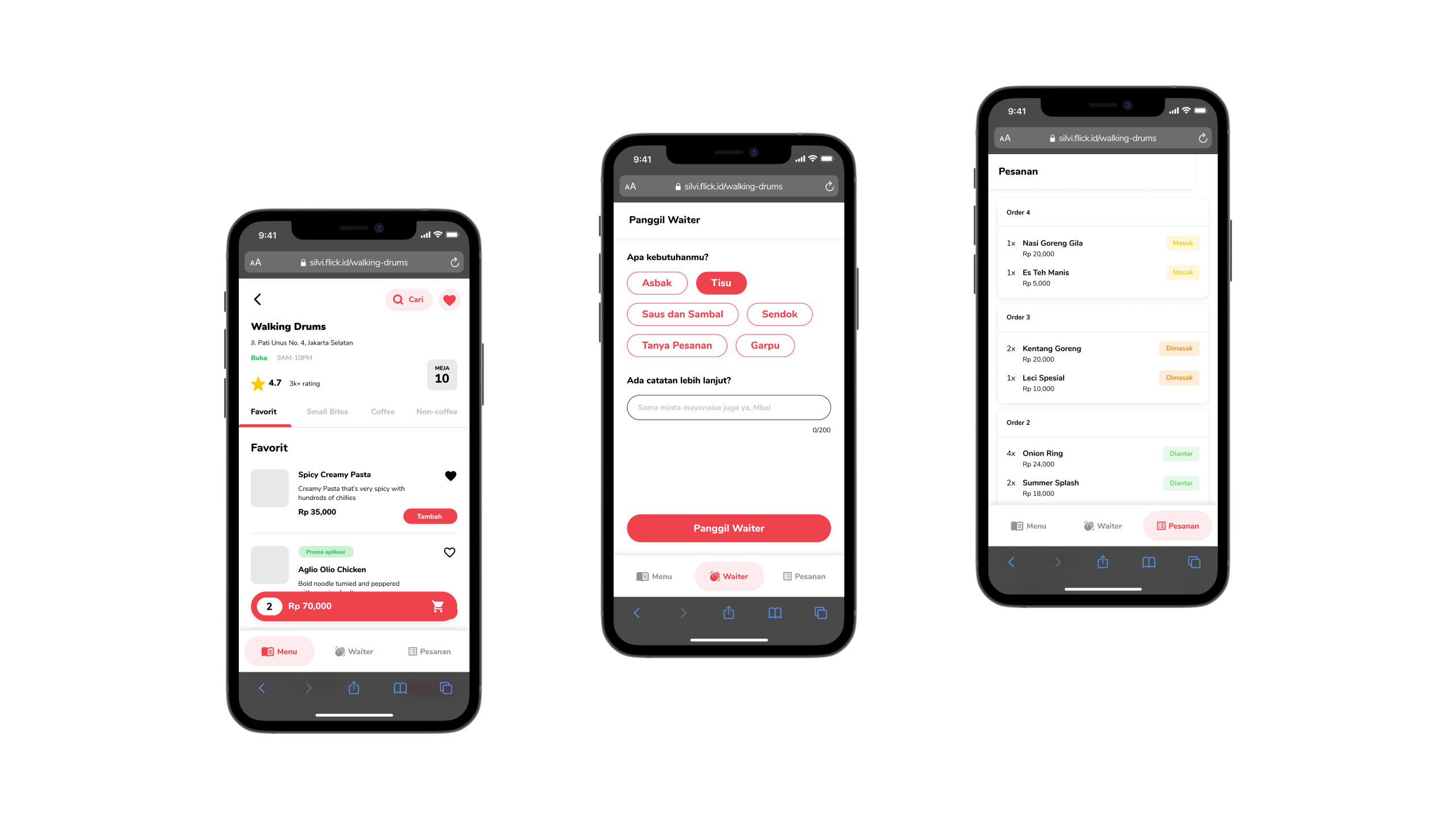
Contactless ordering web-app for customers

For Customers

Contactless order, pay & interact

A web-app accessible via QR code at the table. Customers browse the digital menu, place specific requests, and pay directly — without flagging down a waiter. The order lands directly in the kitchen queue.

Hypothesis: digitalising the merchant's serving process and removing paper entirely would result in faster serving times. Enabling customers to order via QR code would increase order frequency because it removes the friction of catching a waiter's attention.

Testing & Prototyping

Map, simplify, repeat — with the actual users.

We ran a series of user testing sessions with those same 22 business owners and their customers. The approach was tight cycles: build a prototype, test it, collect feedback, iterate. We moved through several rounds before landing on a version we were ready to ship.

The sessions consistently sharpened the interface. Complexity that looked necessary in the abstract turned out to be friction in practice. Menus that felt complete got pared down. Flows that seemed obvious needed prompting.

After Launch

The adoption data told us where to push harder.

Several weeks after launch, Firebase and Google Analytics showed two things: QR code adoption wasn't meeting our target, and merchants weren't completing the transaction after serving orders. We went back to the research.

Finding 01

Customers weren't aware they could order via QR

The QR code was there, but it wasn't prominent. Without an active prompt — or an attractive physical object to scan — most customers didn't know the option existed.

Finding 02

Merchants weren't fluent with the new system

The interface was functional, but the mental model for completing a transaction — especially confirming order statuses — hadn't fully transferred. Education was as much of the problem as the design.

Iterations

Six specific bets we made to close the gap.

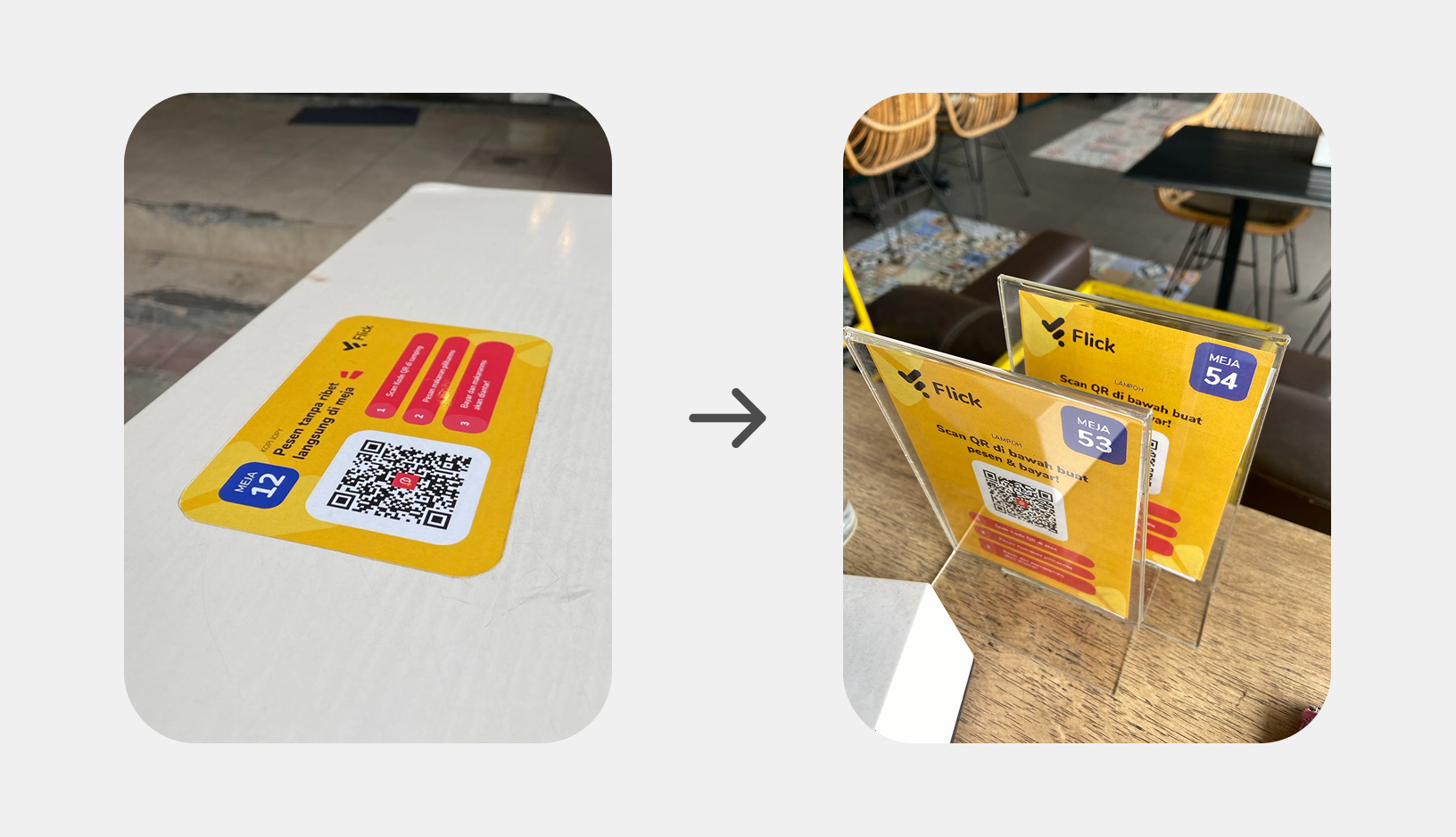
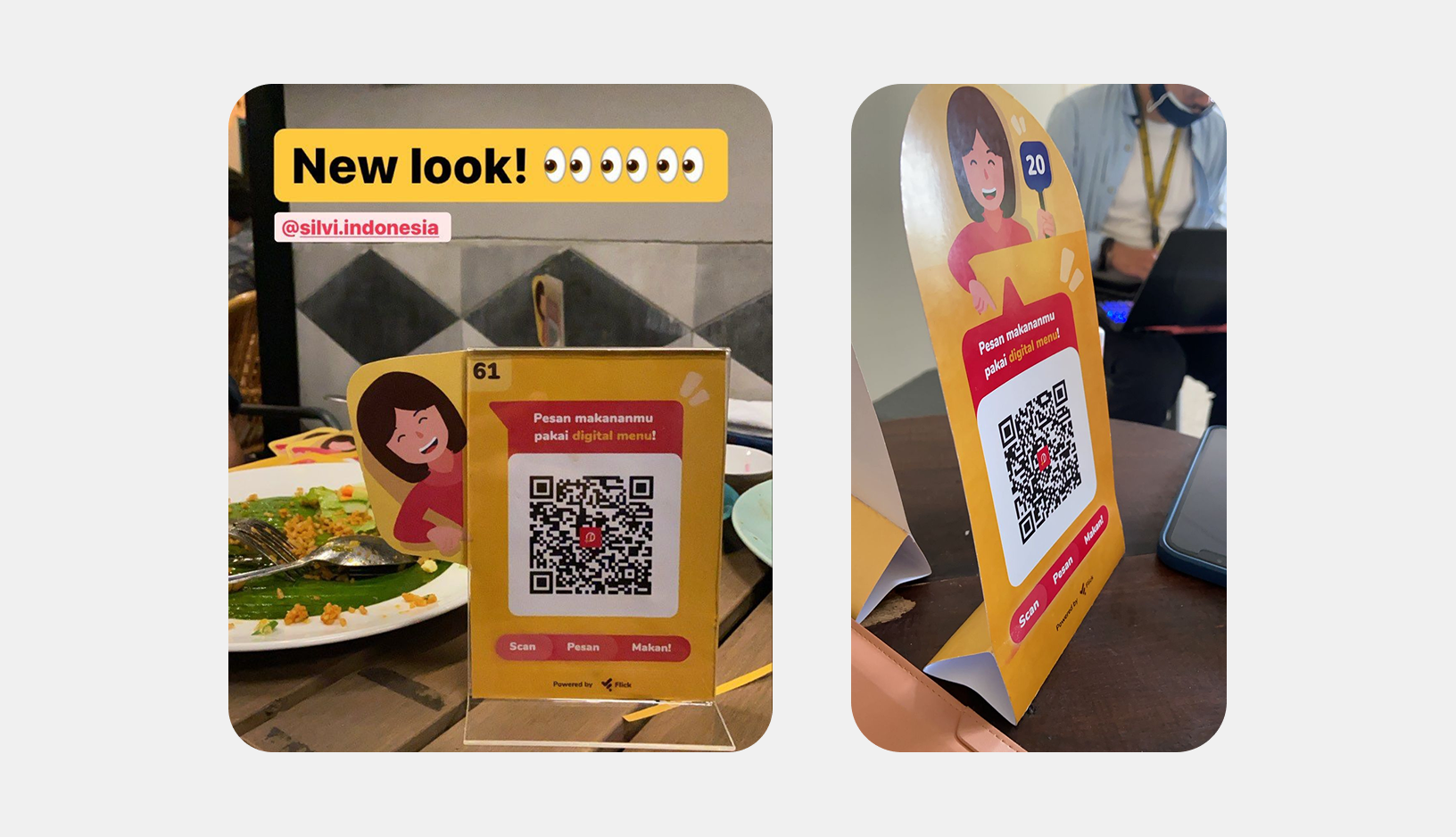
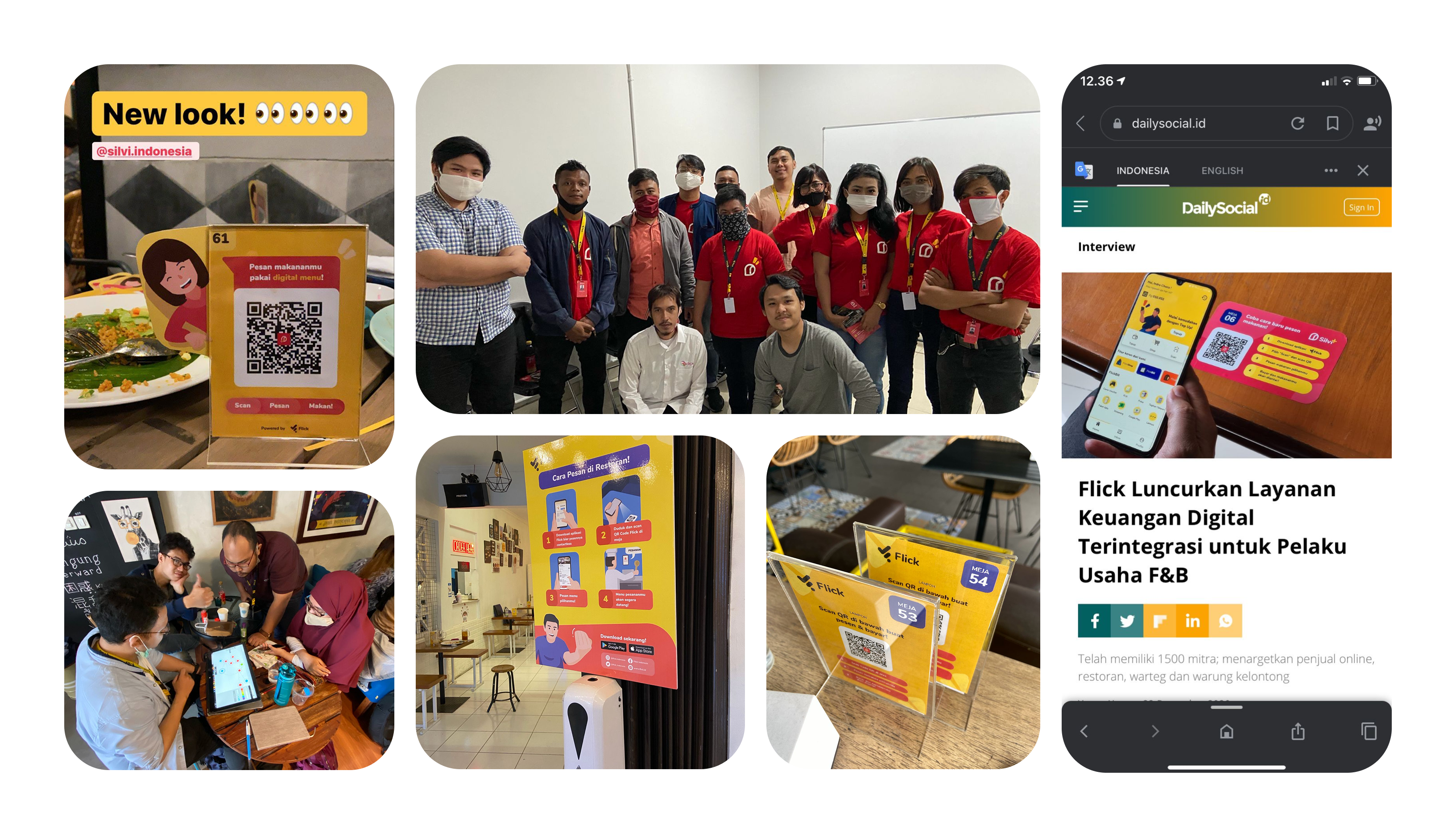
Acrylic QR code stands
01 Switched from paper stickers to acrylic QR code stands — more durable, more prominent at the table
Festive standing QR display
02 Designed a "festive" standing QR display to make scanning feel inviting rather than functional
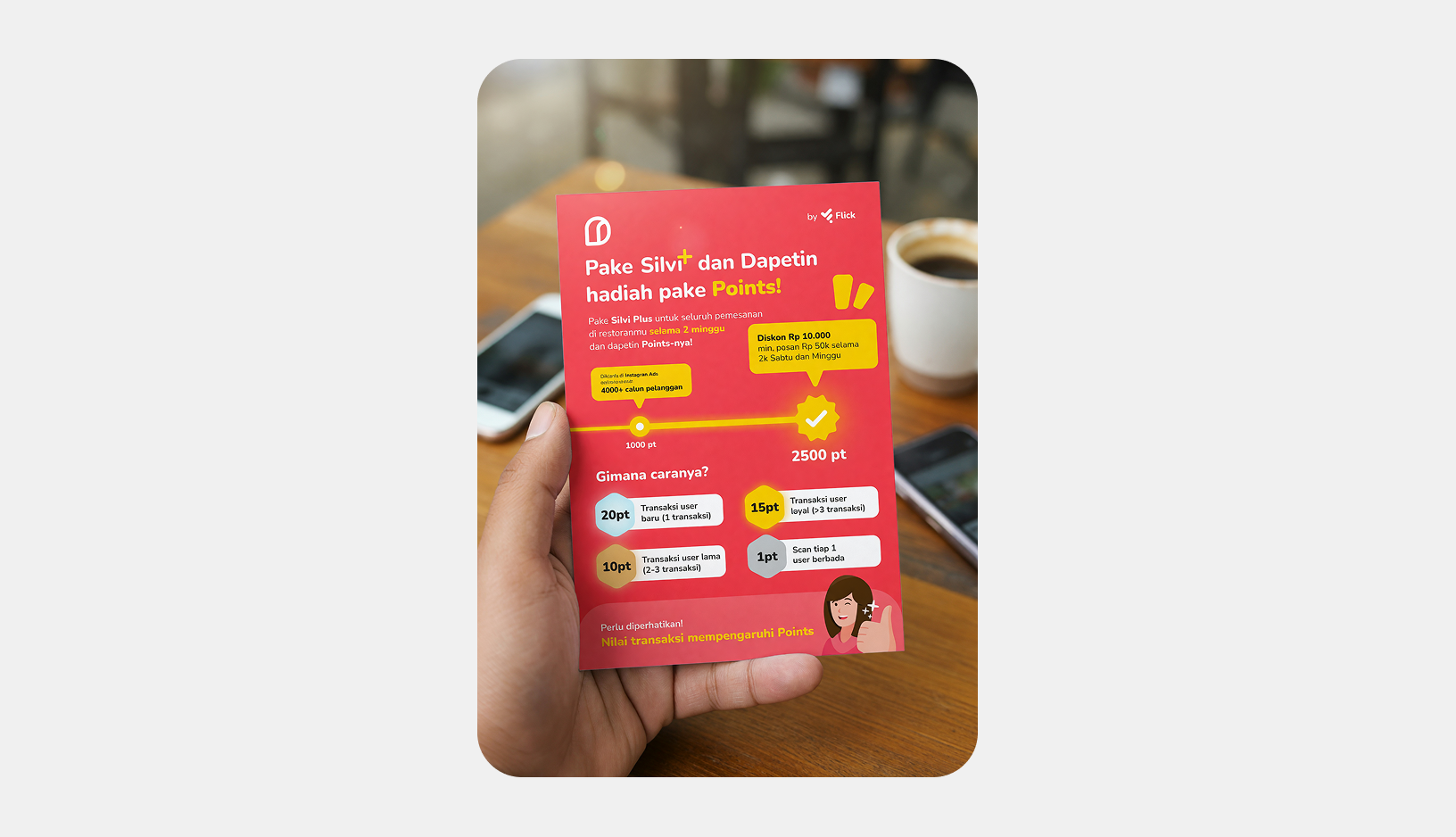
Merchant points programme
03 Launched a merchant points programme — 1 contactless order = 1 point — to incentivise adoption
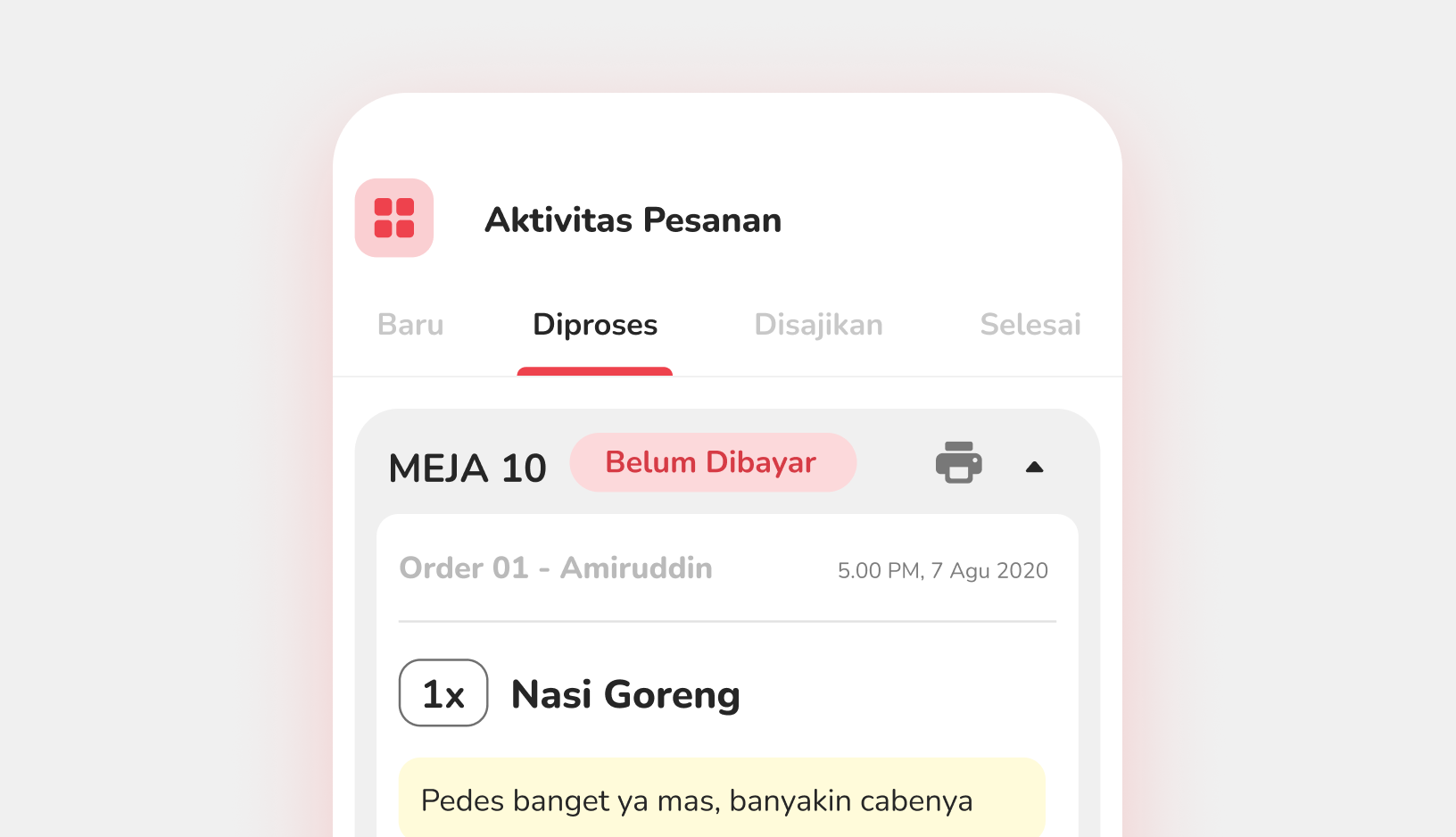
Simplified order status updates
04 Reduced complexity in updating order statuses so merchants could complete transactions with fewer taps
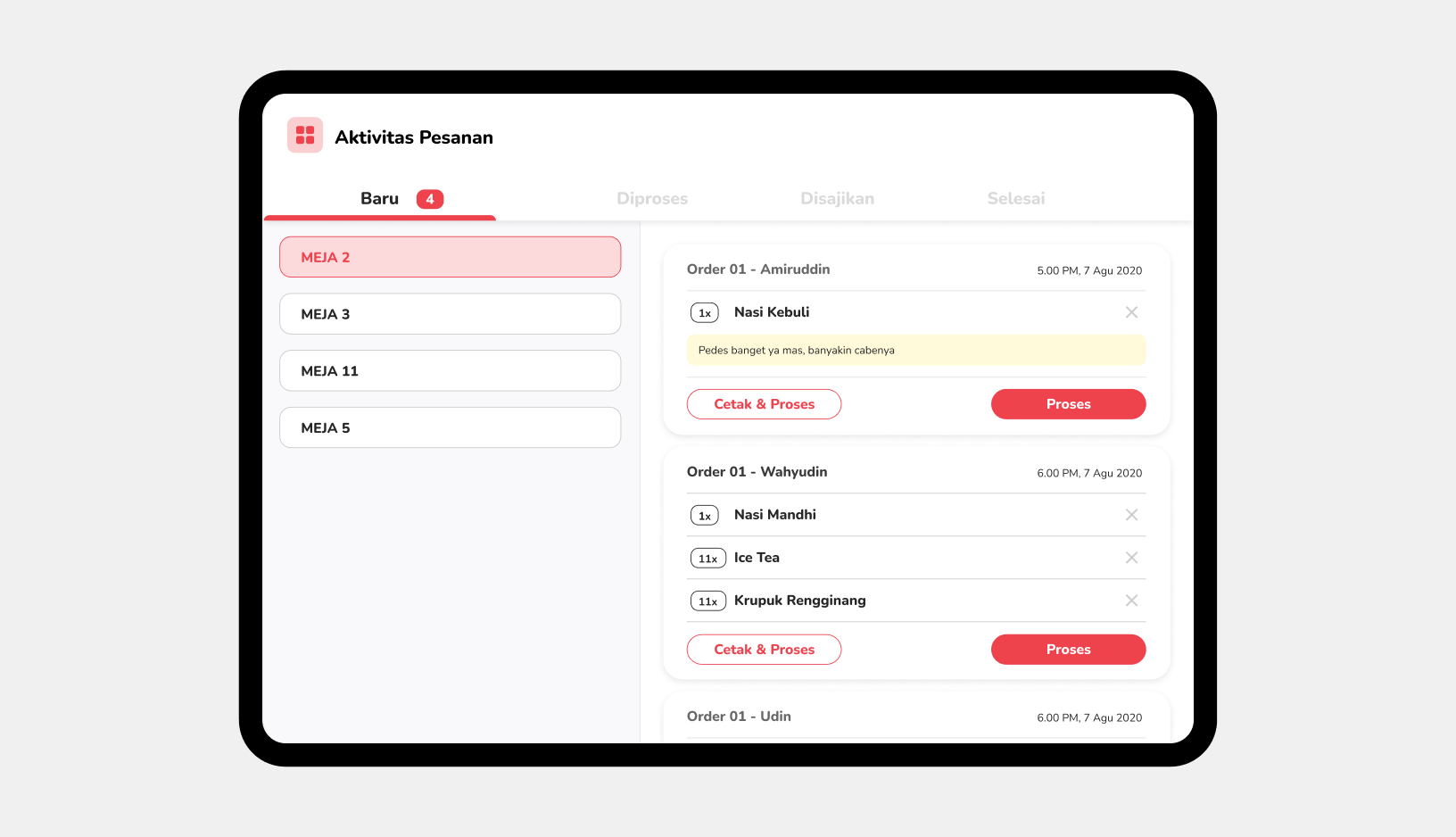
Optimised tablet version
05 Optimised the tablet version to use the larger screen space effectively for monitoring
Simplified onboarding manual
06 Created a simpler, visual onboarding manual book that merchants could refer to without calling support

Outputs & Iterations

Three surfaces. One connected system.

Order Activity Monitoring screen
01
Order Activity Monitoring

One dedicated page in Silvi to monitor and interact with your customer's order-in-table status — every table, every order, in real time.

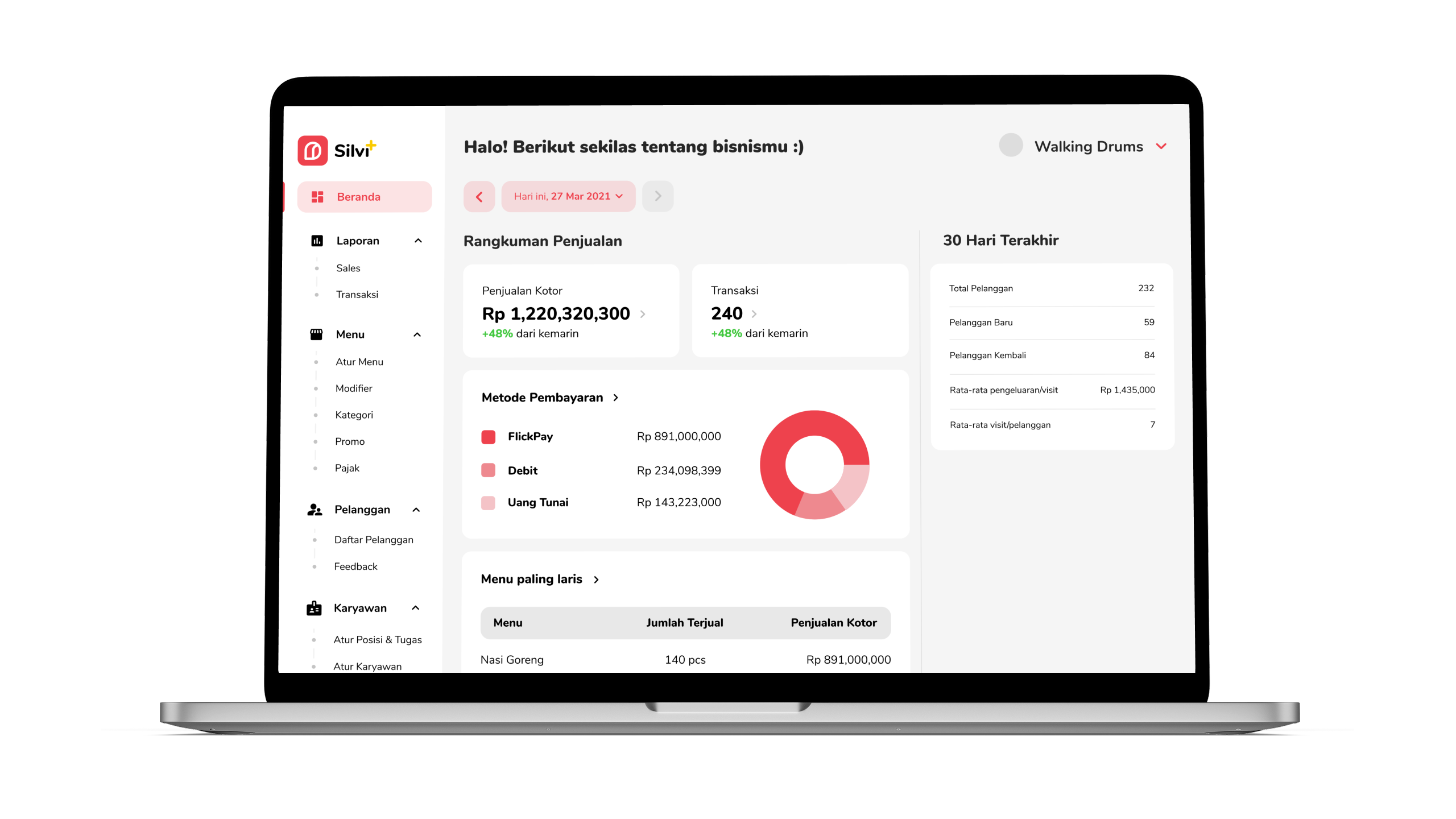
Merchant's back office dashboard
02
Merchant's Back Office Dashboard

Web-based back office for merchants to monitor business performance, manage price menus, payment methods, promos, customers, and more.

Contactless order, payment and interaction
03
Contactless Order, Payment & Interaction

Web-app for customers to access the digital menu — and not just browse. Order and pay directly from the table, without flagging down a waiter.

Impact

The numbers after a full year of iteration.

75% of orders via contactless QR From near-zero adoption at launch to three quarters of all orders flowing through the digital channel
−32% serving time reduction Average serving time dropped from 34 minutes to 23 minutes for food restaurants serving cooked meals
+20% revenue for multi-floor venues Restaurants with a second floor saw a meaningful revenue increase once staff no longer had to ferry orders between floors

What this project taught me about designing in the field.

01
Adoption is a design problem, not just a marketing one

The QR ordering feature worked technically. The problem was that customers and merchants didn't know how to use it — or didn't feel invited to. The interface is only part of the experience. Physical artefacts, onboarding, and education are as much in scope for a product designer as the screens.

02
Working inside the context is irreplaceable

Spending time at these cafés — not as a researcher with a notebook, but just working there — surfaced problems that no interview would have surfaced. The 34-minute serving time wasn't a number from a dataset. It was something I experienced myself. That made the goals feel different to design for.

03
The iteration cycle is the product

The feature that shipped in November 2020 was not the feature that was producing 75% contactless orders a year later. The gap between those two states was closed by a consistent cycle: observe the data, talk to merchants, make a specific change, observe again. The design system we built — Incluitive — was the infrastructure that made that cycle sustainable at scale.
Silvi case study preview